
27 November 2026 | Blog
How airports can automate repetitive passenger enquiries without losing the human touch
27 November 2026 | Blog
How airports can automate repetitive passenger enquiries without losing the human touch
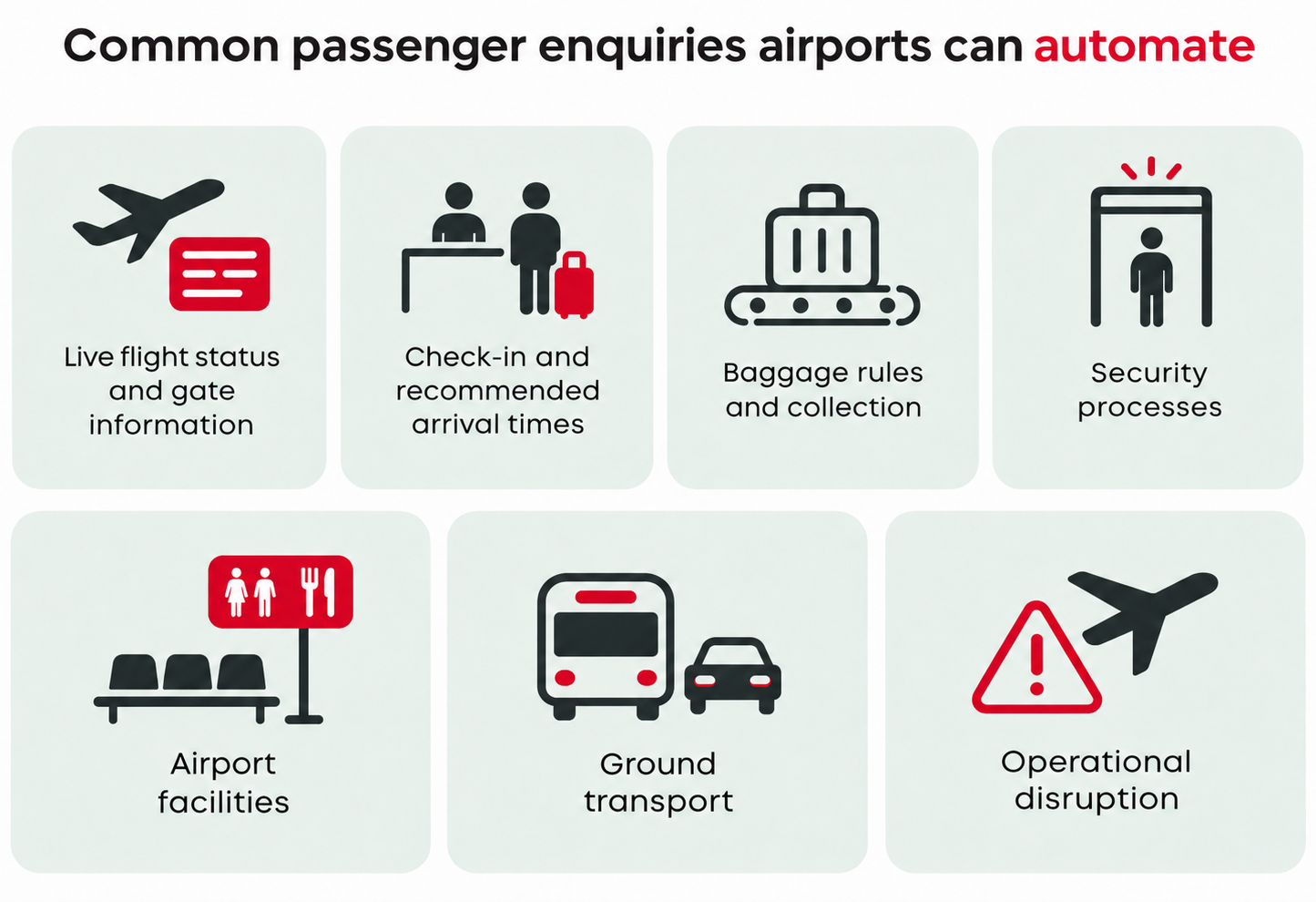
When disruption hits, the questions arrive all at once. At Brussels Airport, use of its digital assistant can increase by as much as four times during disruption, with passengers all asking variations of the same things: is my flight still on time, which gate do I need and what happens to my bags?
Clear, timely communication sits at the heart of a good passenger experience. When people are travelling, often under time pressure, the information you give them shapes how confident they feel about their journey and how they remember your airport long after they have left. Even on a normal day, your teams are handling thousands of enquiries, many of them covering the same topics.
In this article, we look at why repetitive enquiries are an operational problem, what good self-service looks like, and where you can start, all without losing the human touch.
Repetitive enquiries are an operational problem
Phone, email and in-terminal assistance all remain important support channels for your passengers, although they’re not always the most efficient way to deal with every type of enquiry. A phone conversation may be exactly the right option for a passenger with a complex accessibility requirement, but it is far less practical when someone simply wants to know when check-in opens or whether their flight is on time.
When these routine questions reach your customer care teams repeatedly, the impact compounds. This can lead to longer response times, passengers left waiting for answers and teams with less time to focus on the cases that genuinely need their attention.
The pressure on customer care becomes even more noticeable during disruption. A winter storm, an air traffic control strike or a technology failure can trigger a sudden spike in enquiries within minutes, often with many passengers asking the same thing at once. You cannot scale your customer care teams every time demand increases, so you need other ways to manage those peaks, and for many airports, self-service is the natural place to start.
Self-service needs to make things easier
Pointing passengers towards an FAQ page may technically count as self-service, but it does not always mean they get the answer they need. A passenger landing on your FAQs may still have to search through several pages, work out whether the information applies to their flight and check that it is up to date. If they cannot find a clear answer, the process can become frustrating and time-consuming, often leaving passengers with little choice but to contact your team anyway.
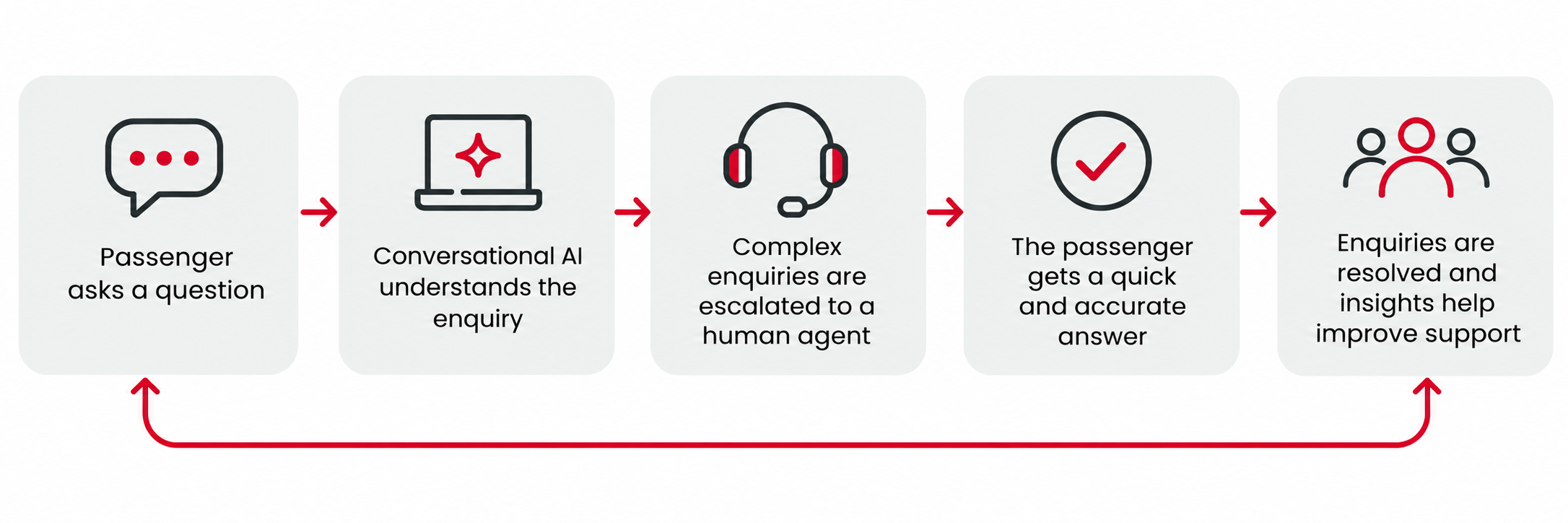
This is where automation can make a real difference. A conversational service can understand what a passenger is asking and respond with relevant information through the channels they already use, such as WhatsApp, Messenger, your airport app or your website.
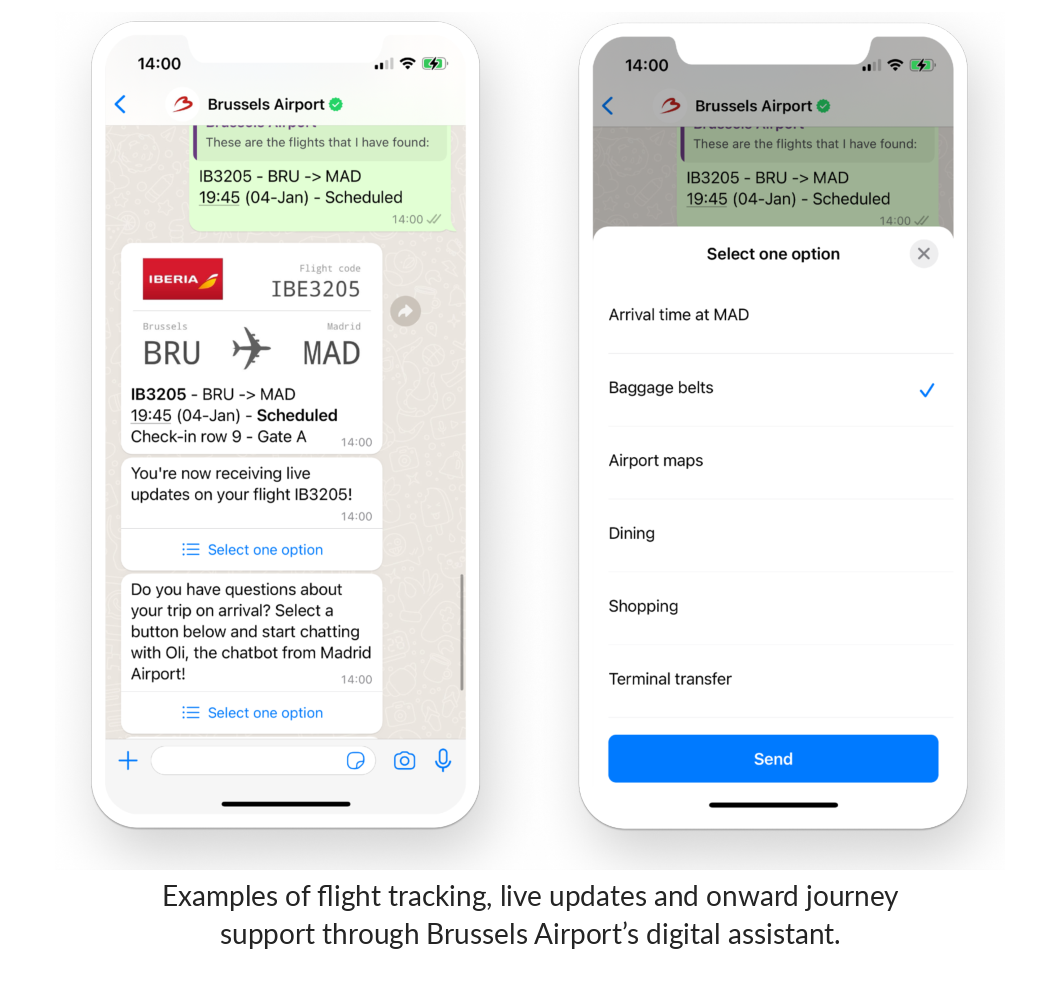
Where the right data is available, responses can also be tailored to the passenger’s flight, destination, departure time or stage of travel. This gives your passengers a more useful answer they can act on, rather than a generic FAQ response, and Brussels Airport shows what that looks like in practice.
How Brussels Airport made passenger information easier to access
Brussels Airport uses 15below’s Airport AI solution to power BRUce, its conversational AI assistant. Before BRUce was introduced, the airport handled passenger enquiries through email, web forms, phone support and in-terminal assistance. As expectations changed, particularly during COVID-19 when travel rules shifted rapidly, passengers needed quicker ways to find accurate updates without searching through web pages or speaking to airport teams.
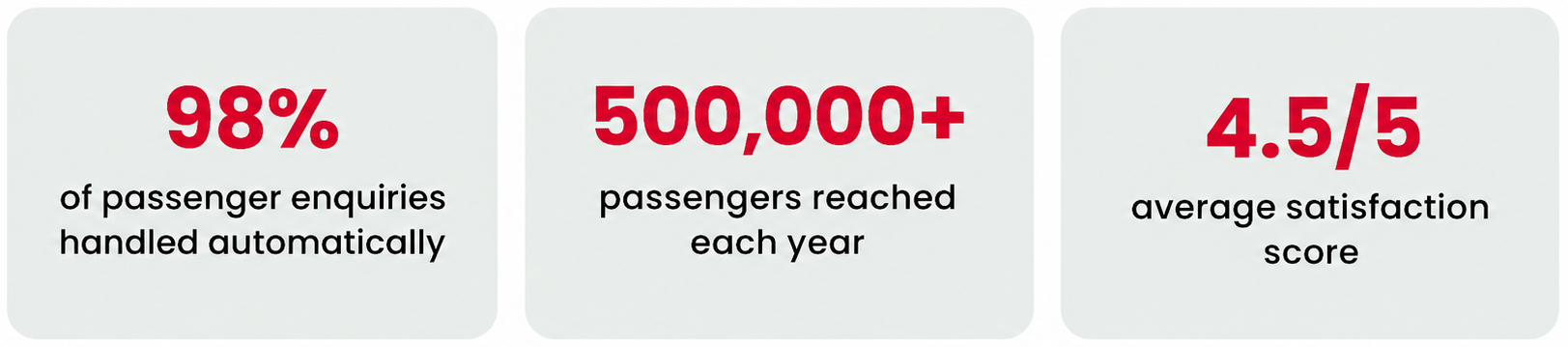
BRUce began as a chatbot for common questions but now provides flight-specific information, real-time updates and alerts. Today, it automatically handles 98% of passenger enquiries, with fewer than 2% escalated to a live agent, and reaches more than 500,000 passengers a year with an average satisfaction score of 4.5 out of 5.
One example of how BRUce is helping passengers access information more easily is its image recognition capability. Passengers can upload a photograph of an item to check whether it can be taken in hand luggage or needs to be checked in. This feature has helped automate almost 25,000 security-related enquiries, giving passengers a quicker way to find answers without needing to contact airport teams.

“The main objective was to make it easier for passengers to access the right information. We wanted something that didn’t require them to scroll through long FAQ pages or contact the airport, but allowed them to find what they needed quickly and easily,”
Michiel Baets,
Digital Consultant, Brussels Airport
Automation gives customer care teams more capacity
Airports often measure the value of automation by the volume of interactions it can handle, and as Brussels Airport shows, those numbers can be significant. However, the more useful measure is what your people can do with the capacity it creates.
While many passenger situations are straightforward, others are more complex. A passenger facing a missed connection, travelling with reduced mobility or trying to locate lost baggage may need reassurance, judgement and practical help from a real person.
If your customer care teams are spending large parts of their day answering routine questions that could be handled automatically, they have less time for those more complex conversations with people who really need them. The best use of automation is therefore not about removing human support, but about making sure that support is available where and when it’s needed most.
Effective self-service also means knowing when a passenger needs human support. When an enquiry becomes too complex for automation to resolve, there should be a clear and straightforward route to an agent.
If a conversation is escalated, that handover should include the conversation history and any relevant flight details the passenger has already shared. This allows the agent to understand the situation and provide support without asking the passenger to explain everything again, avoiding further frustration at a time when they may already be dealing with a difficult journey.
Proactive communication can take even more pressure off teams
Automating incoming enquiries helps your teams manage demand, but clear, proactive updates can prevent some questions altogether. For example, if a gate changes at short notice, a timely message can tell affected passengers where to go without them having to search for the information or contact your team.
The same applies when queues build at security or part of the terminal is affected by disruption. Messages can be targeted using key contextual information such as flight number, airline, destination, departure time or stage of travel. Instead of asking passengers to decide whether a general announcement applies to them, you can explain what has happened, how it affects their journey and what they should do next.
This is particularly valuable during disruption, when generic updates often generate further questions because they lack context. Relevant, timely communication helps passengers make decisions while reducing avoidable demand across your contact centres, information desks and digital channels.
At Brussels Airport, passengers travelling to destinations with specific entry requirements can receive relevant guidance ahead of departure, while those flying during particularly busy periods can be advised to arrive earlier.
Start with the enquiries creating the most pressure
You do not need to automate every passenger interaction at once. Starting with a focused set of enquiries lets you prove the value quickly, learn how passengers use the service and build from there with confidence. A practical starting point is to identify:
- The questions received most frequently
- The enquiries that increase most during disruption
- The channels passengers already prefer
- The systems containing the approved answers
- The cases that should always reach a person
- Where airport and airline information may overlap or conflict
Mapping out these areas first helps you get the most from the technology from day one. Regularly reviewing passenger questions, keeping information up to date and monitoring when human support is needed can help maintain the quality and accuracy of responses.
Your objective should not be to maximise the number of conversations handled by AI. Look at how effectively self-service resolves passenger enquiries, reduces repetitive work for airport teams and improves the overall passenger experience. Metrics such as resolution rates, passenger satisfaction scores and NPS, where available, can help show whether automation is delivering value for both passengers and airport teams.
Keep the human touch where it matters most
Automating repetitive passenger enquiries is not about replacing human support, but making it available where it matters most. By giving passengers quick access to accurate information and reducing the volume of routine questions, airports can create more capacity for their teams to focus on complex situations that need empathy, judgement or practical help.
Brussels Airport demonstrates how this can work at scale, with BRUce automatically handling 98% of passenger enquiries while retaining a route to live support.
Explore our Brussels Airport case study to see how 15below's Airport AI solution supports passenger communication at scale, or get in touch with 15below to discuss where automation could help your airport and customer care teams.


